It’s Fall 2014, the semester before I graduate from high school.
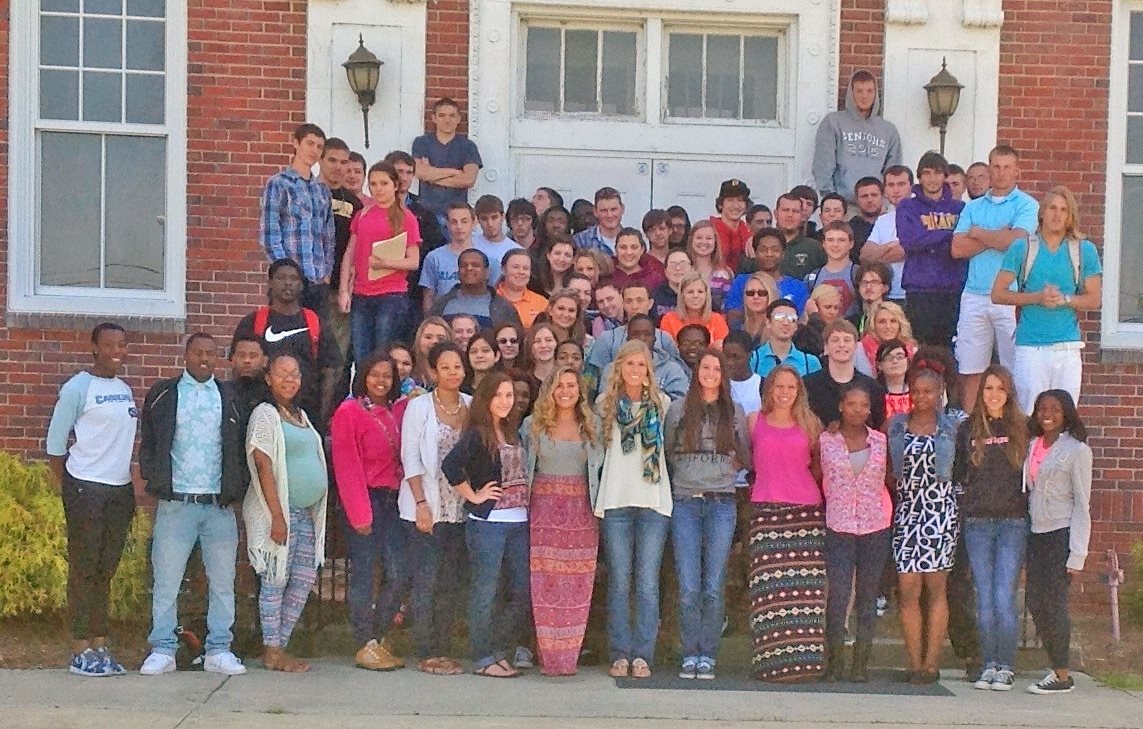
I gather with the rest of my classmates on the front steps to take our group photo for the upcoming yearbook. I’m surrounded by people I haven’t really seen since freshman year — classmates I only shared a few scattered semesters with. Further down from me is Cody. He’s a small-framed, quiet white boy who didn’t start with us in elementary school but joined our class when we became freshmen.
My mouth widens as large as a football field in excitement. We all feel like we finally made it. This moment feels surreal. We’re on our way to finishing high school and starting the rest of our long lives…
A quick snapshot.
It’s Fall 2024, and I stand at the cemetery behind the school, visiting Cody.
I just found out he died, but he’d been gone for a few years. We weren’t close friends. I barely saw him in school — and yet, the grief hit me like I’d lost a brother.
A few weeks earlier, I had pulled my senior yearbook out of a box in my closet. I was feeling nostalgic, curious about what had become of the people I once shared a building with. I flipped through it like a private investigator, matching names to faces and wondering where they’d ended up.
Then I looked up Cody.
The first link was his obituary.
My eyes welled with tears as I stared at the screen. His senior portrait was right there at the top. The dates confirmed it — he was really gone. Not recently. Not last week. Not last year. He’d been dead for years.
I had experienced grief before — I lost my grandmother — but this felt different. And I couldn’t understand why.
How did he die?
Did anyone from our class reach out to his family?
At the time, the world was also grieving the loss of Liam Payne. News of his death dominated headlines and social media for weeks while the investigation played out. Fans around the world — people who had never met him — set up tributes and candlelight vigils in parks and bedrooms and city streets. They shared personal stories about how One Direction helped them through their teenage years. My teenage years.
At first, I didn’t understand the outpouring. But then I did.
Everyone was mourning someone they didn’t personally know but felt deeply connected to.
And there I was, doing the same thing.
Cody wasn’t an international superstar. He didn’t have platinum records or a fan base. But he mattered. To his family. To someone like me.
Maybe I wasn’t just grieving him.
Maybe I was grieving other things, too.
Around that same time, I was carrying the weight of another loss — my friendship with Adan. We hadn’t spoken in a long time, each passing day adding more distance between us. The silence grew heavier, filled with unspoken words and unresolved tension. There was pain on both sides, and I didn’t know how to fix it. Our memories haunted me — all the shared laughter, inside jokes, and hours we once gave to each other. I longed for reconciliation, but I didn’t know how to bridge the chasm that had formed.
It was like grief was piling on.
The whole thing sent me spiraling. I couldn’t stop thinking about Cody. About Adan. About all the people and versions of myself I had lost. It even became a topic in counseling. I’d experienced loss before, but this grief confused me. Cody and I weren’t close — but it still felt real. Tangible.
It forced me to look inward.
I realized I had a lot of regret.
In high school, I didn’t belong to a big friend group. I hovered between cliques, had classmates I talked to during the day, but no one I spent time with outside of school, not until my final semester. And even then, it felt too late. One year, I even found myself bonding with underclassmen, because connecting with people in my own grade felt too difficult.
When I moved back home in 2023 — a year before I found out Cody had passed — everything felt different. I’d gotten used to living on my own with roommates, staying out late, eating takeout, and coming home to silence when I needed it. Life got hard, though, and I found myself under my parents’ roof again, trying not to feel like I was failing at adulthood.
In the final days of February 2025, the cold came from more than just the weather.
Cody’s death opened the door to grief, but my mother’s passing tore the hinges off the door. The day before she was hospitalized, everything felt normal. My dad was outside working on a car. He tried to test-drive it down the road, but it didn’t make it out of the driveway. I spent my afternoon helping him push the car back into the yard.
My mom pulled up from work and jumped into the driver’s seat to steer while we pushed. She made something that could’ve taken hours feel easy. That was one of her gifts — making things better for everyone else.
Something was off that day, though. A strange stillness in the air.
Then a funeral procession passed by the house.
Fear crippled me. I stood there frozen, unable to speak.
I told myself not to overthink it. Surely it had nothing to do with us. We were fine.
So, I thought.
The next afternoon, I jetted from work to the hospital after getting the most horrifying call of my life. My heart matched the speed of the car. She’d had a stroke.
I tried to stay positive. We were people of faith. Surely, she’d be okay. Some recovery. Some rehab. Lifestyle changes. She’d be up and running again.But for twelve days, she couldn’t speak.
She couldn’t open her eyes.
She couldn’t eat by herself.
All I could do was sit beside her and hold her hand, just like she’d once held mine. It was my turn to be there for her.
Can she hear us praying for her?
Uncertainty. Faith. Anger.
My faith stretched to its limit — and then crumbled the moment she left us.
She passed just as the seasons turned, as if her sweet spirit chose to rise with the first signs of spring.
I wasn’t there when she passed. I had been home alone, which, in the end, was what was best for me. I had come the day before and had my moment.
I told her she was still my mother.
I kept telling her I loved her.
Sometimes, when boys grow into men, that’s one of the first things they forget to say out loud. It was something she always wanted to hear.
The day after we gathered our things from the hospital, I drove down a road in town. The flowers were purple — everywhere. I’d never noticed them before. They stayed that way for the next two weeks. Purple was her favorite color. I like to think it was God giving me comfort.
I wanted to walk into her room again.
I wanted to hug her and talk about our day.
I wanted to taste her food, drive around town with her, hear her sing again.
It didn’t happen.
In the months that followed, I pulled back. I only wanted to be around emotionally safe people. I refused to open up to anyone I didn’t feel at peace with. I had to be especially careful about who had access to me, because I was at my most vulnerable.
I went for a walk on Mother’s Day. As I was finishing, a purple, heart-shaped balloon floated toward me.
It felt like her.
Now, all I have are photos and memories.
I look at our senior photo again and spot Cody right away.
None of us knew who we’d become.
Or what we’d have to lose to get there.
The photo never changes.
But I do.
Maybe that’s the essence of grief — being frozen in a photograph while the rest of your life moves on without permission.
***
***
The ManifestStation publishes content on various social media platforms many have sworn off. We do so for one reason: our understanding of the power of words. Our content is about what it means to be human, to be flawed, to be empathetic. In refusing to silence our writers on any platform, we also refuse to give in to those who would create an echo chamber of division, derision, and hate. Continue to follow us where you feel most comfortable, and we will continue to put the writing we believe in into the world.
***
Our friends at Corporeal Writing are reinventing the writing workshop one body at a time.
Check out their current online labs, and tell them we sent you!
***
Inaction is not an option,
Silence is not a response
Check out our Resources and Readings