
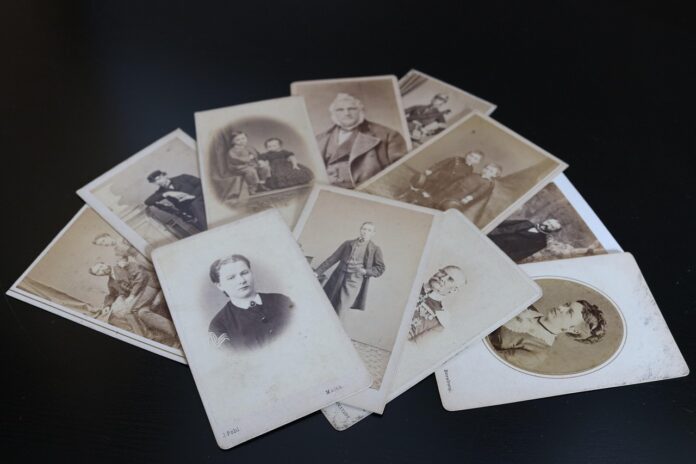

As I lay in Robert Wood Johnson Hospital in New Brunswick, New Jersey, recovering over the course of fifteen days from a bout of bacterial meningitis, I mentally listed three new priorities: write for children; pursue my family history to connect to something greater than my corporate life and leave a legacy for my son; and ditch the husband. My father’s lawyer talked me out of the last item. He said, “You’re sick. This is not the time to make such a major decision.” Maybe he was right. But I knew my husband and I were not a good match. My mother told me this the night she met him. She said, “He’s not for you, baby. He’s not smart enough.” But I went through with the wedding anyway, not hearing my father say as he walked me down the aisle, “You don’t have to go through with this.”
Now, two years later, I’d nearly died and my husband couldn’t handle my illness or the salmonella our eight-month-old son contracted, probably from my mother-in-law’s cooking. Who gives a baby kasha?
So with divorce not on the immediate docket, I focused on family history. A colleague at work, who volunteered at the East Brunswick Mormon Stake and knew a thing or two about genealogical research, mentored me for a couple of months. His first piece of advice was to interview the family elders. With son in tow, I drove up and down the New Jersey Turnpike and the Garden State Parkway to meet with relatives, ask them questions, record their responses, and curate stories and photographs.
I was hooked. Practically every day brought a new discovery. I never knew my father’s grandparents lived in Newark. I never knew they’d even been in America. I didn’t know that Perlman wasn’t my maternal grandfather’s real surname. It was Pryzant. Names, places, and dates came crashing in on me. What a rush! The real surprise was seeing a photo of my paternal grandfather in front of his grocery in Ironbound, Newark. He had hair! Seeing photos of his parents for the first time, I recognized how much my grandfather looked like his father.
I began to take days off from work to go to archives like the New York Federal Records Center, which at the time, was located at a military base in Bayonne. I drove to the New Jersey State Archives in Trenton and brought home photocopies of every birth and marriage record I could find for my Newark relatives. I began to order microfilms of passenger records, census data, and metrical records of my maternal family from the East Brunswick Mormon Stake. At work, during meetings, I sketched out family trees and wrote down syllogisms for relationships and where I’d need to get data to prove or refute my hypotheses.
All the while, though, I had to be home to pick up my son from daycare and make dinner. My husband, a Soviet emigre, expected to be treated “like the man of the family.” Even his sister had said to me when I was released from the hospital, “You need to put your career aside and support his.” I said, “I paid my way through graduate school, and I deserve the benefits. Your brother is lazy, and I’m not going to do his work for him.” He had definitely married the wrong girl, and I was beginning to see just how right my parents had been.
“You need to be home, caring for the baby,” my husband said. “Nobody cares about the past.” I said, “I take time off from work. I’m home for the two of you. You’re not losing out on anything.”
On Friday nights, after he and the baby fell asleep, I crept into the loft area on the second floor of our home and turned on the computer. I spent hours reviewing emails from new genealogy friends, making entries in my research log, mapping out family relationships, and entering data into the Mormon Church’s family history software, Personal Ancestral File. In this self-constructed bubble, I let go of immediate demands and could concentrate on what made me into the person I became, to reclaim the person I once was. On one of these Friday nights, I dreamed of my great-grandmother, Bryna, the one I’m named for. She whispered to me, “Get rid of this yutz.” Who was I to argue?
I made plans to travel to Salt Lake City for the annual Jewish Genealogical Societies conference: a week of research time, lectures, and discoveries. I missed my son, my arms ached for him, but I didn’t miss my husband at all. Here in Salt Lake, I mixed with hundreds of fellow researchers just like me, trying to make connections to the past, trying to understand our ancestors’ decisions, trying to figure out who we were in relation to our predecessors, and how all of that contributed to our own sense of self. When I returned home, driving down Route 287 in rush-hour traffic toward home, the thought occurred to me: I’m going to divorce him. Yes! I called my parents, and their housekeeper, a woman I’d known since I was three years old, asked, “What took you so long?”
We divorced by the end of the year. That was 1991.
Last week, because I’m temporarily disabled, my ex-husband drove me to our granddaughter’s fifth birthday party on Long Island. On the way back to New Jersey, he told me he’d been contacted about his paternal grandfather, a member of the World War II Soviet armed forces who had been killed by a Nazi bomb. The ex started conducting research using his Russian contacts. I know I have notes about his family somewhere. I interviewed his family members while we were still married. He was surprised when I mentioned his grandmother’s second husband’s surname. He asked me about his family history. Now, more than thirty years later, he cares about the past.
***
***
The ManifestStation publishes content on various social media platforms many have sworn off. We do so for one reason: our understanding of the power of words. Our content is about what it means to be human, to be flawed, to be empathetic. In refusing to silence our writers on any platform, we also refuse to give in to those who would create an echo chamber of division, derision, and hate. Continue to follow us where you feel most comfortable, and we will continue to put the writing we believe in into the world.
***
Our friends at Corporeal Writing are reinventing the writing workshop one body at a time.
Check out their current online labs, and tell them we sent you!
***
Inaction is not an option,
Silence is not a response
Check out our Resources and Readings

