
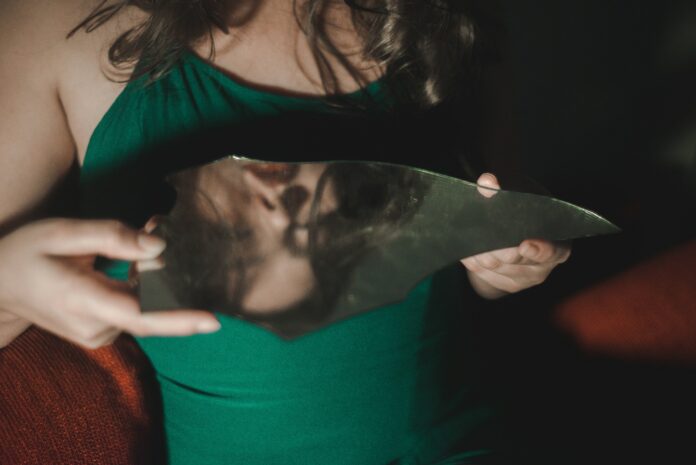

There are breakings that announce themselves loudly, and breakings so quiet you don’t recognize them as breaking at all. The quiet fractures are the most dangerous. They don’t shatter—they whisper. They tap. They hum beneath the surface until one day you reach for your own strength and realize something inside you no longer holds the way it once did.
Mine was the second kind.
It didn’t arrive in a single moment—not a slammed door, not a confession, not a betrayal illuminated by streetlight. My breaking moved slowly, like fog rolling in across a shoreline. Soft. Unassuming. Almost merciful. It began with the smallest silences, the slightest hesitations, the questions I softened because I didn’t want to be the woman who demanded too much. The truth is, I didn’t want to be the woman who admitted she already knew.
There is an old saying that has passed through generations of women, spoken in kitchens, whispered during heartbreaks, repeated when the truth feels too heavy to name:
El cuerpo nunca miente.
The body never lies.
I grew up with that phrase circling my life like a quiet guardian, a reminder that intuition lives in bone and blood long before the mind catches up. And yet, even with that inheritance, I learned how to doubt myself.
Looking back, the first fracture formed the moment I felt something shift in the room and told myself I was imagining it. I remember the way my stomach tightened—subtle but certain—and the whisper that skimmed across my mind like a warning: Something’s off. My body knew. It always did. But instead of trusting it, I smoothed the edges of my suspicion and swallowed them whole.
Another fracture opened the night I apologized for a wound he caused. I felt a tremor beneath my sternum, a quiet protest from the woman I used to be—the woman who trusted her own knowing with her whole chest. But I apologized anyway, bending myself into someone softer, smaller, easier to love. The moment I chose his comfort over my clarity, something essential inside me cracked.
Breakings, I’ve learned, are rarely catastrophic at first. They’re incremental. They’re the slow erosion of self-trust. They’re the rehearsed quietness of generations of women who were taught that intuition is hysteria, that softness is survival, that silence is safety.
I didn’t understand this then. I thought love could hold anything if I held it gently enough. If I bent without breaking. If I offered the tenderest parts of myself as proof of devotion. But devotion without reciprocity teaches the heart to fracture in familiar patterns. It trains you to romanticize endurance, to misinterpret longing as connection, to label your own intuition as overreaction.
My body kept trying to tell me the truth.
But I kept choosing hope over knowing, illusion over instinct.
The becoming came later.
And like the breaking, it began quietly.
It started one morning when I caught my reflection—not the woman he saw, not the woman I had contorted myself into, but the woman I had misplaced somewhere along the way. She looked back at me with tired eyes and a steadiness that startled me. It felt ancestral, like a remembering of something older than the relationship itself.
A returning to that phrase I had heard my entire life:
El cuerpo nunca miente.
It continued the moment I let myself feel what I had avoided: his absence wasn’t the deepest wound. The deepest wound was how quickly I had abandoned myself.
Becoming often looks like loneliness at first.
Like returning to an empty home and realizing the quiet is more honest than his half-love ever was.
Like hearing your own voice after speaking softly for too long.
Like realizing intuition is not a threat but a compass.
Then the light comes in.
Not all at once. Not in grand revelations. But in thin, steady beams—glimmers inside the fractures. The shimmer beneath the break. The truths I buried under hope and habit.
I began to understand that I wasn’t grieving him.
I was grieving the version of myself who believed love required betraying her own knowing.
I was grieving the long line of women before me who swallowed their intuition to keep the peace.
And when I understood that, everything softened.
I stopped looking for closure from him and started looking for coherence within myself. I stopped replaying the questions he wouldn’t answer and started listening to the intuition that had answered them long before. I stopped mourning what wasn’t real and started mourning the parts of myself I abandoned along the way.
Becoming is not forgiveness—not at first.
It is recognition.
It is reclamation.
It is remembering the wisdom carried by the women in my lineage:
El cuerpo nunca miente.
For me, becoming happened in a quiet room where nothing dramatic occurred. No shouting. No tears. Just a soft, startling clarity: the breaking did not ruin me. It revealed me. It returned me to myself.
Now, when I think of that time, I don’t replay the hurt.
I remember the moment I chose myself.
The moment intuition rose again—clear, unwavering, undeniable—
…and this time, I listened.
***
***
The ManifestStation publishes content on various social media platforms many have sworn off. We do so for one reason: our understanding of the power of words. Our content is about what it means to be human, to be flawed, to be empathetic. In refusing to silence our writers on any platform, we also refuse to give in to those who would create an echo chamber of division, derision, and hate. Continue to follow us where you feel most comfortable, and we will continue to put the writing we believe in into the world.
***
Our friends at Corporeal Writing are reinventing the writing workshop one body at a time.
Check out their current online labs, and tell them we sent you!
***
Inaction is not an option,
Silence is not a response
Check out our Resources and Readings

You’ve described my experience perfectly—the breaking and the returning to myself. Thank you so much for a beautifully crafted, vulnerable, telling of what so many of us go through