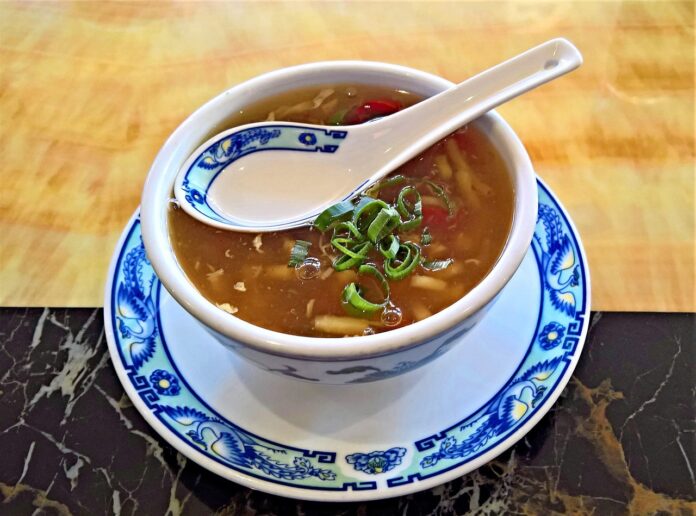

Every year, on Super Bowl Sunday, my mother made hot and sour soup.
My mom was born and raised in the Shenandoah Valley of Virginia, on the edge of the Appalachian Mountain Region. She was one of five children born to my grandparents who had grown up in the farms of rural Augusta County and the surrounding areas. They settled in the suburbs of Staunton, where my grandfather ran a plumbing and heating business. My grandparents had come of age during the Great Depression and worked hard to give their children a better life. My grandfather encouraged his children to go to college—including his daughters—and get the education that he did not get a chance to have.
However, it was also expected that with college, his daughters would also graduate with their MRS degree. All my mother’s sisters got married during or right after college. My mom was the only one to come back home unmarried, where she was expected to take care of her mom and dad and help run her father’s business.
But my mom wanted something more out of life than just staying stuck at home. All her sisters had taken off and started families of their own and even gone to graduate school with the support of their husbands, where they got teaching degrees. Mom sent away for information about graduate schools and applied. One day, while she was at home alone, she got a call from Northwestern University, offering her a fellowship to their program in Education of the Hearing Impaired. But she had to accept it right there on the spot, else they would pass the opportunity along to someone else. She didn’t have time to consult her mom and dad.
The next fall, she took off for Chicago, much to her father’s dismay.
After graduate school, she relocated to the Northeast where she took her first teaching job. She lived on her own and learned to cook different types of foods. My mom had grown up on country cooking, things like chicken and dumplings, cornbread, apple pies and apple sauces and vegetables. It was good food in its own right, but devoid of the herbs and spices that define more ethnic cuisine. She even tried different diets to help with some of her food allergies and sensitivities.
It was there that she learned to make Chinese recipes, such as simple stir fries and even hot and sour soup. Somehow, it became a tradition after she married my dad, for her to make it once a year on Super Bowl Sunday in January.
Our family was not much into the Super Bowl. My dad watched it, but we really weren’t football kind of people. Deep down, I wished that we were. Sometimes, we went to a neighbor’s house for a Super Bowl party and they had all sorts of foods like pizza and wings, soda and beer and an assortment of chips and dip. My dad got along well with people like that, although they weren’t in his immediate circle of friends. My mom did not really fit in at all with those kinds of people.
I wished that we were laid back and fun. I wished that we were the kind of people who ate nachos and drank beer and ate pizza and hot wings and chips. I wished that we ate dips made from cream cheese and sour cream and Hidden Valley Ranch. Like the neighbors. But no. We were the kind of people who stayed in and ate hot and sour soup.
I still remember preparing the soup with my mom. She’d take me up to Poughkeepsie, to an Asian grocery store tucked away behind the Price Chopper Plaza. Back then, Asian grocers weren’t very common and the ones that were around weren’t the most trustworthy places.
And yet, I was fascinated by the products that I saw on the shelf. My mom would buy shiitake mushrooms and dried lily buds. She’d also buy rice-wine vinegar and a block of tofu. Some ingredients used in the traditional soup—such as duck’s blood and sea cucumber—weren’t used in the modern recipe.
I really enjoyed the soup. I hadn’t yet acquired a taste for sour. But I loved the tender shiitake mushrooms, and the stringy lily buds and bamboo shoots, which I’d shovel into my mouth like spaghetti.
But my parents’ marriage was beginning to unravel. Anger and anxiety seeped through our home, and I soaked it all up. Arguments turned into fights and then into blowouts of verbal abuse. One year, on Super Bowl Sunday, when I was about nine years old, my parents had a terrible fight, one of the worst I’d seen yet. Mom had gone through all the trouble making the hot and sour soup. But dad was in a bad mood, and during the evening, something got in between them that triggered a massive shouting match. The evening ended with doors slamming and the police coming to deal with their dispute. Mom went to bed early. Dad went upstairs to his recliner and didn’t come down until three am and crawled into bed next to her.
We never made hot and sour soup again after that.
I never again found hot and sour soup like my mother’s. The stuff at most Chinese restaurants today is thick and corn starchy. There are small chunks of tofu and a few mushrooms and egg drops. But it lacks the body, the flavor and the texture that her soup had. I asked her, years later, if she’d be willing to make it again, but she declined.
******
***
The ManifestStation publishes content on various social media platforms many have sworn off. We do so for one reason: our understanding of the power of words. Our content is about what it means to be human, to be flawed, to be empathetic. In refusing to silence our writers on any platform, we also refuse to give in to those who would create an echo chamber of division, derision, and hate. Continue to follow us where you feel most comfortable, and we will continue to put the writing we believe in into the world.
***
Write for your Life with The Craft School
CRAFT SCHOOL is a vibrant community for writers led by Jeannine Ouellette, Emily Rapp Black, and Gina Frangello—three established writers with extensive teaching experience. They believe, and we agree, that when a community is both safe and rigorous, writers and their work flourish. Tell them we sent you!
***
Inaction is not an option,
Silence is not a response
See our Resources and Readings

