
My mother’s hands were never still. Even in sleep, her fingers would twitch against the bedsheets, practicing some phantom piece of Chopin or tracing the invisible seams of a dress she had yet to sew. She was a woman who believed that empty space was an invitation—a canvas demanding paint, a silence begging for a song, a blank page requiring ink. When she died on a Tuesday morning in late autumn, the sudden immobilization of those hands felt less like a cessation of life and more like a violent rupture in the laws of physics.
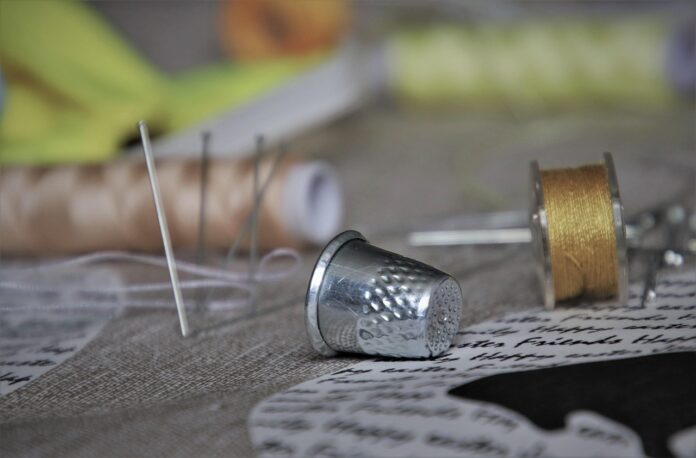
For months after the funeral, the house remained exactly as she had left it. A half-empty cup of chamomile tea sat on the bedside table, accumulating a thin skin of dust. A silver thimble rested on the edge of the windowsill, catching the pale winter light. In the kitchen, a notebook lay open to a recipe for lemon tart, her handwriting looping and hurried, ending abruptly mid-sentence with the words: and then you must gently fold in the…
We never found out what we were supposed to fold in.
Grief, I discovered, does not arrive all at once like a thunderstorm. Instead, it enters the house like an unwanted roommate, quietly unpacking its bags in the spare bedroom, hanging its heavy coat in the hallway, and sitting down at the dinner table without asking permission. It changes the molecular weight of the air. It makes the simple act of inhaling feel like pulling broken glass into your lungs.
In those early weeks, my primary coping mechanism was avoidance. I became an expert at looking slightly to the left of things. If I did not look directly at her favorite armchair, she wasn’t missing from it. If I didn’t open the closet door, her winter coats weren’t hanging there like shed skins, still holding the faint, metallic scent of her lavender perfume. I lived in a state of suspended animation, moving through the world with a brittle, glass-like fragility, terrified that any sudden movement would cause me to shatter.
The hardest part of being alive in the wake of a monumental loss is the realization that the world does not stop spinning. The mail carrier still delivers bills. The grocery store still plays upbeat pop songs from the nineties while you stare blankly at rows of cereal boxes. The sun still rises, indifferent to the fact that the architecture of your universe has completely collapsed. You want to scream at the people walking down the street, to grab them by the shoulders and demand to know how they can possibly be smiling when the world has ended. But you don’t. Instead, you buy your milk, nod politely to the cashier, and carry your breaking heart home in a brown paper bag.
***
By the third month, the silence in the house had grown heavy, almost tectonic. My father and I moved around each other like two satellites trapped in overlapping orbits, careful not to collide, careful not to speak the name that lived under our tongues. We were trapped in a polite choreography of survival.
“Did you eat?” he would ask.
“Yes,” I would lie. “Did you?”
“Yes,” he would lie back.
Eventually, the inevitable task could no longer be delayed. The house needed to be cleared. We had to sort through sixty-four years of a life, translating a woman’s existence into three distinct categories: keep, donate, discard. It is a cruel taxonomy. How do you decide which ceramic mug represents the essence of a person? Is a receipt for a pair of shoes bought in 1998 a relic or trash?
We started with the attic, a damp space filled with boxes of old photographs and holiday decorations. Sitting on the dusty floorboards, surrounded by the remnants of forgotten decades, I found a small, battered leather suitcase. Inside were hundreds of letters, tied together with faded blue ribbons. They were the letters my parents had written to each other during their two-year separation in the early 1970s, when my father was stationed overseas.
I picked up a letter at random. The paper was thin, almost translucent, yellowed at the edges. My mother’s handwriting was different then—younger, less hurried, the letters rounded and full of hope. She wrote about the mundane details of her day: the price of apples, a stray dog she had fed on the porch, the way the fog rolled over the hills in the evening. But woven between those ordinary observations was a fierce, desperate longing. The bed is too large without you, she wrote in June of 1973. I spend the nights listening to the house creak, imagining it is your footstep on the stairs. Come home soon. The summer is wasting away.
Reading those words, a strange realization washed over me. The woman who wrote those letters was not just my mother; she was a separate entity, a young girl who had loved, feared, and waited long before I was ever a thought in her mind. Grief had blinded me to her complexity. I had been mourning a maternal monolith, a fixed point in my universe, forgetting that she was a person who had navigated her own dark nights of the soul.
I looked across the attic at my father. He was holding a framed photograph of her from their wedding day, his thumb gently wiping a layer of dust from her glass face. His shoulders were rounded, curved inward as if trying to shield his heart from a blow. In that moment, I understood that our grief was not the same. I had lost a past; he had lost a future. I had lost the origin story of my life; he had lost his co-author.
***
There is a Japanese art form called Kintsugi, where broken pottery is repaired using lacquer dusted with powdered gold, silver, or platinum. The philosophy behind it is beautiful: instead of disguising the fractures, the object is restored by treating the breakage and repair as a fundamental part of its history. The scars make the piece stronger, more precious, more honest.
Human beings, however, are rarely afforded the grace of Kintsugi. We are expected to heal in private, to glue ourselves back together with invisible epoxy, and to return to society without a single seam showing. We are told to “move on,” a phrase that implies healing is a linear journey with a definitive destination, a border you cross where you leave the pain behind.
But healing from a deep loss is not a straight line. It is a labyrinth. Just when you think you have found your way out, you turn a corner and find yourself back at the center, facing the monster of your grief all over again.
By the sixth month, the initial numbness had worn off, replaced by a dull, aching anger. I found myself furious at everything. I was angry at the cancer that had eaten her away from the inside out. I was angry at the doctors who had given us false hope. I was angry at my friends who texted to ask how I was doing, because their concern felt like a reminder of my tragedy. Most of all, I was angry at myself for the things I hadn’t said.
We are all haunted by the ghosts of unexpressed emotions. I remembered an argument we had shared a year before her diagnosis—a stupid, petty argument about something long forgotten, a door slammed, a weekend of icy silence. I remembered the times she had called me just to chat, and I had cut her short because I was “too busy” with some urgent, temporary work deadline. The memory of those moments felt like a physical weight, a debt that could never be repaid.
One afternoon, while organizing her bookshelf, a small index card slipped out from between the pages of an old volume of poetry by Mary Oliver. On it, my mother had written a single quote in her hurried script: “To live in this world, you must be able to do three things: to love what is mortal; to hold it against your bones knowing your own life depends on it; and, when the time comes to let it go, to let it go.”
I sat on the floor and wept. It was not the quiet, polite crying I had practiced in public. It was a visceral, ugly sob that tore from the deepest part of my chest, a release of all the anger, guilt, and terror I had bottled up for months. I cried for the words we never got to say, for the recipe that would never be finished, for the future she would never see.
And for the first time, it felt like the glass inside me wasn’t shattering—it was settling.
***
It has been two years now since the world changed. The house has been sold. The furniture has been distributed among relatives or given to strangers. The letters tied in blue ribbon sit in a climate-controlled box in my own closet, a sacred archive of a love story that preceded my own.
I have learned that you do not “get over” a loss. You do not wake up one day to find that the hole in your heart has miraculously healed itself. Instead, the hole remains, but the world grows larger around it. You build a new life around the void. You learn to walk around the edge of the crater without falling in.
The grief has shifted. It is no longer a sharp, tearing pain; it has become a soft, familiar weight, like an old wool coat that I wear on cold days. It has integrated itself into the fabric of who I am. It has made me kinder. It has made me listen more closely when people speak. It has stripped away the illusion of permanence, forcing me to look directly at the people I love and acknowledge their mortality, and my own.
Sometimes, I still find myself reaching for the phone to call her. A funny thing happens at work, or a certain bird lands on my balcony, and my first instinct is to share it with her. For a split second, the loss is fresh all over again. But then, the realization follows, no longer accompanied by an agonizing ache, but by a quiet, bittersweet gratitude. The desire to call her is proof that the connection remains, that love does not end when a heart stops beating.
We are all made of echoes. I look at my own hands now, and I see the exact shape of her fingernails. I catch myself using her phrases when I speak to my own friends. I make the lemon tart, guessing at the missing instruction, folding the egg whites into the batter with a hand that is slightly hurried, slightly looping.
Being alive is a complicated, messy, and terrifying business. It is a guarantee of heartbreak. To love means to eventually mourn. To build means to eventually see things fall apart. But as I stand in my kitchen, watching the winter light move across the counter, I realize that the beauty is not found in the absence of brokenness. It is found in the willingness to live among the fractures, to honor the spaces left behind, and to keep singing the song, even when you are the only one left to hear the echo.
******
***
The ManifestStation publishes content on various social media platforms many have sworn off. We do so for one reason: our understanding of the power of words. Our content is about what it means to be human, to be flawed, to be empathetic. In refusing to silence our writers on any platform, we also refuse to give in to those who would create an echo chamber of division, derision, and hate. Continue to follow us where you feel most comfortable, and we will continue to put the writing we believe in into the world.
***
Write for your Life with The Craft School
CRAFT SCHOOL is a vibrant community for writers led by Jeannine Ouellette, Emily Rapp Black, and Gina Frangello—three established writers with extensive teaching experience. They believe, and we agree, that when a community is both safe and rigorous, writers and their work flourish.
***
Inaction is not an option,
Silence is not a response
See our Resources and Readings

